
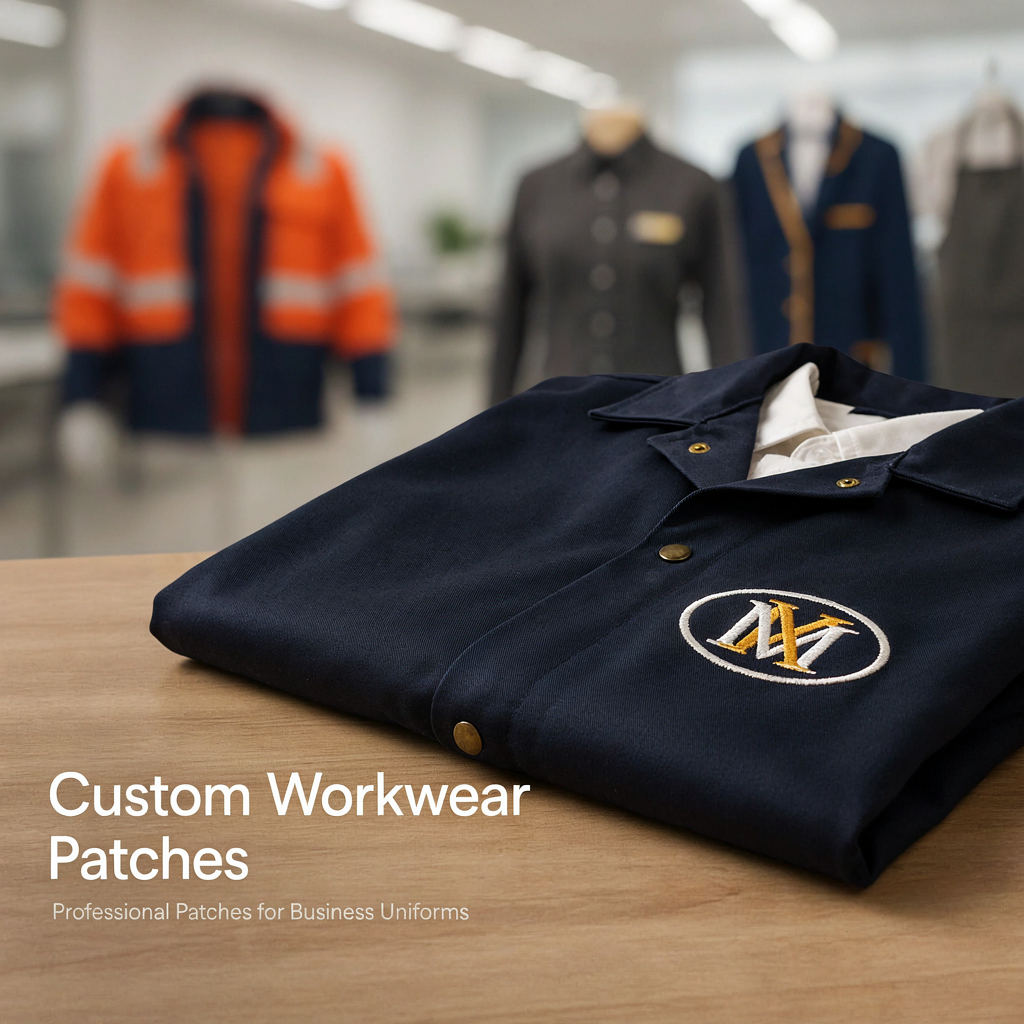
Choosing custom workwear patches is about more than putting a company logo on a shirt or jacket. The patch needs to suit the garment, represent the brand clearly, and hold up to the conditions employees actually work in. A restaurant uniform, construction jacket, retail polo, and hotel cap can all require different patch characteristics.
For Canadian businesses, the decision often comes down to three things: appearance, application method, and how the uniform will be used and maintained. Custom uniform patches can create a consistent professional identity, but the right construction matters just as much as the artwork.
Below, we’ll look at the main patch options for hospitality, industrial, and retail workwear, along with backing choices and practical considerations for businesses ordering custom patches for work uniforms.
Why Sector-Specific Patch Choices Matter
A patch that works beautifully on a retail cap may not be the best option for a construction uniform. Different workplaces expose garments to different levels of washing, abrasion, moisture, movement, and everyday wear.
For example, restaurant staff may need work uniform patches that remain polished after frequent cleaning. A construction company may care more about a sturdy attachment method and easy-to-read branding on jackets and shirts. Retail teams, meanwhile, may put greater emphasis on fine logo details and a clean visual presentation.
The logo itself is only one part of the decision. Businesses should also consider:
- The type and weight of the garment
- How often the uniform is washed
- Whether employees work indoors or outdoors
- The amount of detail in the logo
- Where the patch will be placed
- Whether the uniforms will need patches replaced or updated
- How consistent the branding needs to remain across different garments
This is why custom patches for businesses should be selected around the actual job environment rather than simply choosing the most familiar patch style.
What Makes Workwear Different from Casual Gear
Workwear generally has a tougher job than casual clothing. Uniforms may be worn for long shifts, exposed to dirt or moisture, repeatedly washed, or subjected to regular friction around sleeves, chest areas, shoulders, and pockets.
A patch can also behave differently depending on the garment. A lightweight polo, structured work shirt, canvas jacket, and cap each have different surfaces and construction.
Common concerns include:
- Patch edges lifting from the garment
- Thread or fabric showing excessive wear
- Small lettering becoming difficult to read
- Incorrect backing for the garment material
- Logo colours appearing inconsistent between uniform pieces
- Poor placement affecting comfort or appearance
- A patch construction that does not suit frequent cleaning
That does not mean every work uniform requires the heaviest possible patch. The better approach is to match the patch construction to the application.
For instance, a simple company name with bold lettering may work exceptionally well as an embroidered patch. A detailed logo with small text may benefit from a woven construction instead.
Workwear Patch Types at a Glance
There is no universal “best” patch for every workplace. The most suitable option depends on the logo, garment, desired appearance, and intended use.
Embroidered Patches
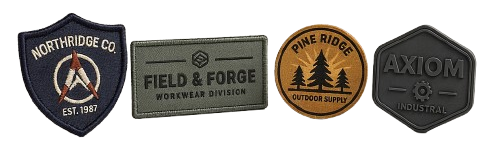
Embroidered patches are a popular choice for uniforms because stitched thread gives the design a traditional, textured appearance. They work particularly well with bold logos, simple symbols, initials, and larger lettering.
For businesses looking for custom embroidered uniform patches, embroidery can create a recognisable branded appearance on shirts, jackets, hats, and other workwear.
Best suited to:
- Construction and trades
- Restaurants
- Hotels
- Service companies
- Corporate uniforms
- Team apparel
- Branded jackets and caps
One consideration is artwork detail. Extremely small lettering or intricate graphics may not translate as cleanly into embroidery as they would into a finer patch construction. A good design review can help determine whether the logo should be simplified or produced using another method.
Woven Patches
Woven patches use tightly woven threads rather than the raised stitching associated with traditional embroidery. This creates a smoother surface and can make them useful when a logo contains finer details or smaller lettering.
They can be a strong option for retail staff, hospitality uniforms, branded outerwear, and businesses that want a clean, relatively flat appearance.
Woven patches are particularly worth considering when:
- The logo contains fine lines
- Small lettering is important
- A smoother surface is preferred
- The patch will be placed on apparel where a flatter profile works better
- Brand details need to remain visually crisp
Perfect Print® Sublimated Patches
Printed patch methods can be useful when the artwork relies heavily on detailed imagery, gradients, or a broad range of visual elements that would be difficult to reproduce with conventional stitching.
For a company logo, the important question is not simply whether a design can be printed. Consider how the artwork will look at the actual finished patch size and whether the garment and intended application suit that construction.
Businesses should also ask about the recommended attachment method and care requirements for the particular patch and garment combination.
For Canadian businesses with complex artwork, discussing the original design with a patch supplier before placing a larger order can prevent unnecessary revisions.
Backings & Application Methods That Matter
Selecting the patch itself is only half the job. The backing and attachment method determine how the patch is installed and how practical it is for the garment.
Sew-On Backing
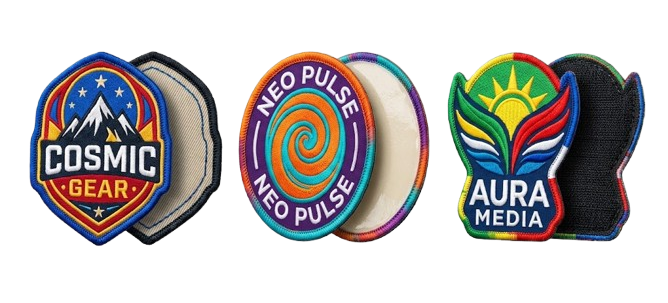
Sew-on patches are attached directly to the garment with thread. This makes them a practical option for uniforms, jackets, bags, and other items where a permanent attachment is preferred.
They can be especially useful for rugged garments or applications where the business wants the patch physically secured to the fabric rather than relying only on adhesive.
Heat Seal / Iron-On Backing
Heat-applied patches use controlled heat to attach the patch to compatible fabric. They can provide a neat finish and make installation convenient, but the garment material and application instructions need to be considered first.
Not every fabric should be exposed to the same temperature or pressing method. For uniforms made from specialised or heat-sensitive materials, confirm compatibility before application.
Velcro / Hook-and-Loop Backing
Hook-and-loop backing is useful when patches need to be removed or changed. This can make sense for organisations using interchangeable names, roles, departments, or identification patches.
It can also be useful when one garment needs to support different patches for different assignments or events.
The right backing depends on more than convenience. Before ordering, consider the garment fabric, patch position, expected use, and whether the patch needs to remain permanently attached.
Industry-Specific Recommendations
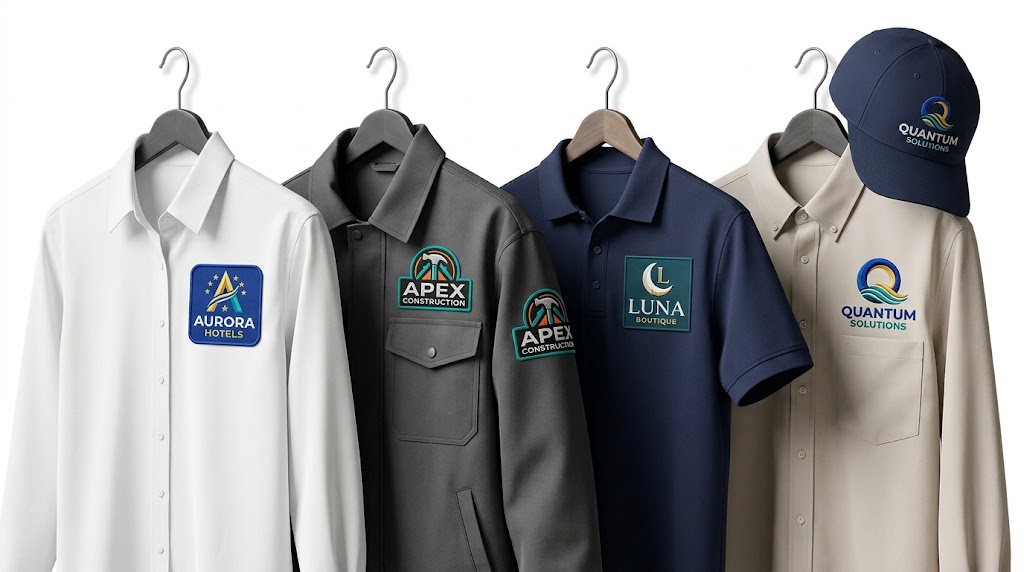
Different industries have different priorities, so the best company uniform patches should reflect how employees actually use their uniforms.
Hospitality
Restaurants, cafés, catering businesses, hotels, and hospitality teams often need uniforms that look professional while remaining practical for daily work.
For front-of-house employees, a clean embroidered or woven logo can reinforce the business identity without overpowering the uniform. Name patches can also help customers identify staff members quickly.
For hospitality businesses, consider:
- Logo visibility from a normal customer distance
- Clean lettering
- Patch size relative to the shirt or jacket
- Consistent placement across employees
- Compatibility with regular garment cleaning
- A patch style that suits the business’s visual identity
A restaurant with a bold, traditional logo might favour embroidered patches, while a hotel with a detailed emblem could find a woven patch more suitable.
Industrial
Construction companies, contractors, manufacturers, trades, maintenance teams, and utility businesses often place greater emphasis on practical performance.
The patch needs to remain clearly identifiable on the garment without interfering with other equipment, pockets, closures, or safety-related components.
For industrial workwear, think about:
- Garment thickness
- Abrasion around the patch location
- Outdoor exposure
- Frequency of cleaning
- Attachment method
- Logo readability
- Compatibility with the specific uniform material
Custom employee uniform patches can also help distinguish departments, roles, or company teams when multiple groups share similar workwear.
For heavy-duty applications, businesses should discuss the intended garment and care conditions with their patch supplier before deciding between sew-on, heat-applied, or another backing.
Retail
Retail employees interact directly with customers, so presentation becomes a major consideration. A patch should look intentional, remain easy to identify, and fit naturally with the company’s clothing style.
Woven and embroidered options can both work well depending on the logo. A simpler logo may benefit from embroidery’s texture, while detailed branding may be better suited to a smoother construction.
Retail businesses may also need flexibility when updating seasonal apparel, changing brand campaigns, or introducing new garment colours.
For those situations, consider:
- Logo clarity
- Colour consistency
- Patch size
- Garment placement
- Ease of reordering
- Whether different patch styles are needed for shirts, jackets, and caps
How to Evaluate a Supplier for Multi-Site Rollouts
Ordering a handful of patches for one uniform is different from outfitting employees across several locations.
If your business operates multiple restaurants, stores, offices, job sites, or service teams, consistency becomes much more important. A supplier should understand the importance of maintaining the same artwork, dimensions, colours, and construction across repeat orders.
Before placing a larger order, ask:
- Can the supplier review your artwork before production?
- Can they recommend a patch type based on your logo?
- Which backing is suitable for your specific garment?
- Can the same design be reordered later?
- How should colours and dimensions be specified?
- Are samples or artwork proofs available when appropriate?
- What information should be provided about the uniform fabric and intended use?
For businesses ordering workwear patches Canada wide, clear communication is particularly useful. The more specific the original requirements are, the easier it is to maintain consistency when uniforms are ordered at different times.
Stitch Patches CA can be a practical option for businesses comparing custom patch styles for their uniforms. Instead of selecting a patch solely from a picture, customers can discuss the artwork, garment and intended application to determine which construction makes sense for the project.
Quick Workwear Patch Decision Guide
A simple way to narrow the choices is to start with the main priority rather than the patch name.
- Need a traditional, textured company logo? Consider an embroidered patch.
- Need fine logo details or smaller lettering? A woven patch may be worth considering.
- Want a detailed visual design? Explore a printed patch option.
- Need a patch that can be removed and replaced? Consider Velcro or hook-and-loop backing.
- Want a permanent attachment? Sew-on may be a practical choice.
- Need a convenient heat-applied option? Heat-seal or iron-on backing may work if the garment is compatible.
For custom patches for work uniforms, the best choice is the one that balances the logo design, garment, application method, appearance, and working conditions.
A quick comparison:
| Requirement | Option to Consider |
|---|---|
| Bold traditional company logo | Embroidered |
| Fine lettering and detailed logo | Woven |
| Complex visual artwork | Printed |
| Permanent attachment | Sew-on |
| Convenient heat application | Heat seal / iron-on |
| Removable or interchangeable patch | Velcro / hook-and-loop |
Ready to Source Your Patches?
The right patch can make a work uniform look more professional while giving employees a consistent visual connection to the business. But there is no need to choose based on appearance alone.
Start with the logo, then consider the garment, placement, cleaning routine, working environment, and preferred attachment method. A restaurant, construction company, hotel, retail store, and corporate team may all need different solutions even if they are ordering patches for the same basic purpose.
Stitch Patches CA offers custom patch options for businesses that want to turn their branding into practical uniform patches. If you’re unsure whether embroidery, woven construction, PVC, chenille, printed patches, or another option fits your application, the artwork and garment requirements are a good place to start the conversation.
Have a company logo ready but aren’t sure which patch style makes the most sense? Review the artwork, uniform material, placement and intended use before ordering. That small step can make the final custom workwear patches look more consistent and perform better for the job they were designed to do.
FAQS
What are custom workwear patches?
Custom workwear patches are branded patches made with a company’s logo, name, emblem, or other design and attached to uniforms and work clothing. They can be used on shirts, jackets, hats, caps, vests, and other garments to create consistent business branding.
What type of patch is best for work uniforms?
Embroidered patches are a popular choice for work uniforms because they provide a professional, textured appearance and work well with bold logos and lettering. Woven or printed patches may be better suited to designs containing fine details or smaller text.
Are embroidered patches good for business uniforms?
Yes, embroidered patches are well suited to many business uniforms, particularly when a company wants a traditional stitched appearance. They can be used on work shirts, jackets, caps, restaurant uniforms, hotel apparel, and other branded workwear.
What is the difference between embroidered and woven patches?
Embroidered patches are made with visible stitched threads that create a textured surface, while woven patches use tightly woven threads to create a smoother finish. Woven construction can be useful when a logo contains fine lines, small lettering, or detailed artwork.
Which backing should I choose for custom uniform patches?
The right patch backing depends on the garment and how the patch will be used. Sew-on backing can suit permanent applications, heat-seal or iron-on backing can be convenient for compatible fabrics, and Velcro backing is useful when patches need to be removed or replaced.