
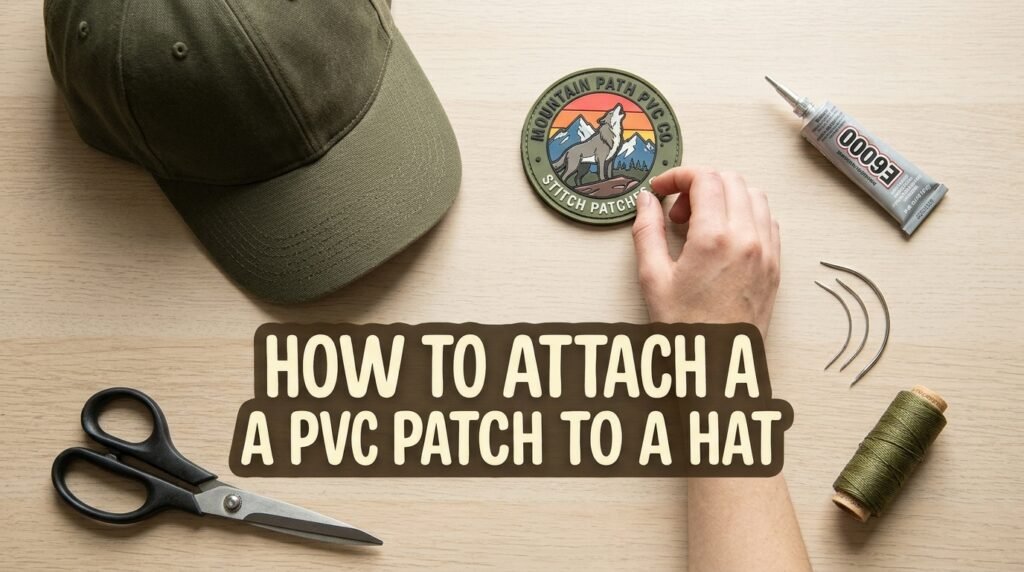
A PVC patch can be attached to a hat in several ways, but the correct method depends on its backing. Some PVC patches are designed for sewing, some use hook-and-loop fasteners, and others are manufactured with heat-activated backing. Using the wrong method can damage the patch, mark the hat or lead to poor attachment.
Before starting, check the back of your patch or ask the supplier which attachment method it supports.
1. Check the PVC Patch Backing First
Turn the patch over and identify its backing. This is the most important step because not every PVC patch is designed for the same application method.
| Backing type | How it attaches | Best use |
|---|---|---|
| Sew-on or stitch-channel | Stitched around the patch edge | A more permanent fabric attachment |
| Heat-applied | Applied with compatible heat-press equipment | Hats and fabrics approved by the patch manufacturer |
| Hook-and-loop (Velcro) | Presses onto a matching loop panel | Removable and interchangeable patches |
| Adhesive | Sticks to a compatible surface | Only where the adhesive manufacturer approves the intended material |
| Plain backing | Requires an approved attachment method | Depends on the patch construction |
If you cannot identify the backing, do not experiment with an iron, glue or heat gun. Confirm the correct method first.
2. How to Sew a PVC Patch onto a Hat
Sewing is a suitable option when the PVC patch has a sew-on edge or stitch channel.
You will need: A needle suitable for the hat fabric, strong thread, scissors, pins or fabric clips, and a thimble if needed.
- Choose the position on the hat and check that the patch sits naturally against the curved panel.
- Secure the patch temporarily with clips or pins. Avoid placing pins through the visible PVC design.
- Thread the needle and begin stitching along the designated edge or stitch channel.
- Keep the stitches close and evenly spaced so the patch stays flat.
- Tie off the thread securely on the inside of the hat, then check the patch edges.
Avoid piercing the raised PVC design itself. If the patch has no stitch channel or suitable sew-on construction, ask the supplier before attempting to stitch it.
3. How to Heat-Apply a PVC Patch to a Hat
Some PVC patches are specifically manufactured with heat-applied backing. These are different from ordinary PVC patches, so check the product instructions before using heat.
For a compatible patch:
- Confirm that both the patch backing and hat material are approved for heat application.
- Use a hat press designed to accommodate the curved crown.
- Position the patch carefully and secure it as instructed by the supplier.
- Apply the exact temperature, pressure and pressing time specified for that patch and equipment.
- Allow the patch to cool as directed before handling it.
Do not use a universal temperature or pressing time. Different PVC patch systems and heat-press equipment can require different settings. A household iron is not a safe substitute unless the patch manufacturer specifically approves it.
4. How to Attach a Velcro PVC Patch to a Hat
A Velcro-backed PVC patch is a practical choice when you want to remove or change the design.
First, check whether the hat already has a loop-fabric panel. The hook side on the patch attaches to this soft loop surface.
- Find the loop panel on the front or side of the hat.
- Check that the panel is large enough for the patch.
- Align the patch with the panel.
- Press the two sides together firmly.
- Check that the patch is attached evenly around its edges.
If your hat does not have a loop panel, the patch will not attach securely just by pressing it against ordinary hat fabric. A compatible loop panel must be added first.
5. Common Mistakes to Avoid
- Using heat without checking the backing: Standard PVC patches are not automatically heat-press compatible.
- Applying ordinary craft glue: Do not assume general-purpose glue will create a durable bond between PVC and hat fabric.
- Using adhesive on an unapproved fabric: Adhesive performance depends on the specific product and surface.
- Ignoring the hat’s curved shape: A patch that does not sit naturally can lift or look uneven.
- Choosing the wrong patch size: Measure the usable front panel before ordering.
- Skipping a test: If you are applying a batch of patches, test the method on one hat first.
6. Which PVC Patch Attachment Method Should You Choose?
For a hat that will be worn regularly, choose a backing designed for the hat material and intended use. Sewing can provide a permanent fabric attachment when the patch is made for stitching. Heat application can work when the PVC patch has compatible heat-transfer backing and the correct equipment is available. Velcro is the better option when the patch needs to be removable.
The best choice is the one specified for your particular patch and hat—not simply the easiest method to try at home.
Frequently Asked Questions
Can you iron a PVC patch onto a hat?
Only if the PVC patch is specifically manufactured with heat-applied backing and its supplier provides suitable instructions. Do not assume an ordinary PVC patch can be ironed on.
Can you sew a PVC patch onto a cap?
Yes, when the patch is designed for sewing or has a suitable stitch channel. Stitch around the designated edge rather than through the visible PVC design.
Can you glue a PVC patch to a hat?
Only use an adhesive that the manufacturer confirms is suitable for both the PVC patch and the hat material. Ordinary craft glue should not be treated as a reliable attachment method.
Do PVC patches work on trucker hats?
They can, provided the patch size and backing suit the front panel. Check the panel’s available space and the patch’s attachment requirements before ordering.
Can you remove a Velcro PVC patch?
Yes. Hook-and-loop backing is designed to be removed and reattached to a compatible loop panel.
Choose the Right PVC Patch for Your Hat
Planning custom hats for a business, club, team or brand? The backing should be considered alongside the patch size, design and hat construction.
Explore custom PVC patches in Canada or learn more about custom Velcro patches for hats.
Send your design to Stitch Patches Canada to discuss the patch style and backing that suit your project.